Loading…
History · book
How the Spaniards Won in Marawi but Lost in Cavite
- Publisher
- New Day Publishers
- Year
- 2018
- Language
- English
- Pages
- 222
- ISBN
- 9789711013622
- Availability
- In print
Still in print: the link goes to a shop that sells it.
About the book
The Spanish campaigns against the Maranao in the 1890s, set against the revolution that broke out in Luzon at the same time.
Rey Luis Adeva Montesclaros gives an account of 2 major Spanish military campaigns in Lanao: the Weyler campaign of 1891 and the Blanco campaign of 1895. He says the recent destruction of Marawi moved him to write it, as proof that history keeps repeating itself in Lanao.
His main argument links Lanao to Luzon. Spain sent 5 of its 7 army regiments in Mindanao against the Maranao, and this left its forces near Manila weak when the 1896 Revolution broke out. Cavite fell as a result. In his view, Spain might have beaten the Katipunan had its troops not been tied down in the south.
The 222-page book also fills a gap in the history of northern Mindanao. It covers the work of the Spanish religious orders there and the hardships of migrant settlers, who faced Maranao resistance because they were seen as tools of Spanish rule. The author offers these lessons to policymakers and others dealing with Mindanao today.
From yuchengcomuseum.org.
On the same shelf
1973In print
Muslims in the PhilippinesCesar Adib Majul
The standard history of the Muslim peoples of the Philippines: the coming of Islam, the sultanates of Sulu and Maguindanao, and three centuries of Spanish wars against them, told from the Moro side of the record. Reissued by the University of the Philippines Press in 1999.
1905Free to read
Studies in Moro History, Law, and ReligionNajeeb M. Saleeby
The first English account of Maguindanao’s genealogies and of the law codes and Islam of Maguindanao and Sulu, translated by an American colonial official who read the originals. Out of copyright and free to read.
1908Free to read
The History of SuluNajeeb M. Saleeby
Sulu from its earliest written genealogies to the American arrival, drawn from the sultanate’s own documents, Spanish records and the author’s years in Jolo. Out of copyright and free to read.
1977Out of print
Mandate in MorolandPeter G. Gowing
How the United States ruled the Moro Province and the Department of Mindanao and Sulu, from the Bates Treaty to the start of Filipinization, from the records of the men who governed. Reprinted by New Day in 1983.
1979Out of print
Muslim Filipinos: Heritage and HorizonPeter G. Gowing
A general introduction to the Muslim peoples of the Philippines, their history, faith and institutions and their place in the republic, written for Filipino readers from the Dansalan Research Center in Marawi.
1981In print
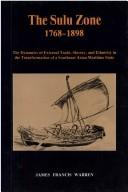
The Sulu Zone, 1768–1898James Francis Warren
The Sulu Sultanate at its height as a trading state: the China trade in sea produce, the slave raiding that fed it, and the peoples it drew in, from Spanish, British and Dutch archives. The book that made the Sulu Zone a field of study. Second edition 2007.
More from New Day Publishers
1979Out of print
Muslim Filipinos: Heritage and HorizonPeter G. Gowing
A general introduction to the Muslim peoples of the Philippines, their history, faith and institutions and their place in the republic, written for Filipino readers from the Dansalan Research Center in Marawi.
1983Out of print
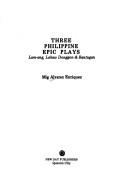
Three Philippine Epic PlaysMig Alvarez Enriquez
Three epic heroes put on stage, among them Bantugan, the hero of the Maranao Darangen.
1985Out of print
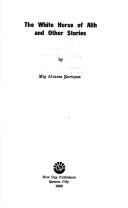
The White Horse of Alih and Other StoriesMig Alvarez Enriquez
Stories by the Zamboanga writer. In the title story a Moro man, Alih, and his brother Omar plan to attack a crowd celebrating an American holiday, and Alih turns on his brother to stop him.
1988Out of print
Understanding Islam and Muslims in the Philippinesed. Peter G. Gowing
Essays on Islam as it is lived in the Philippines, collected and edited by Peter Gowing.
1989Out of print
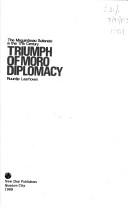
Triumph of Moro DiplomacyRuurdje Laarhoven
Sultan Kudarat’s Maguindanao as the Dutch and Spanish records show it: a sultanate that held its own between two empires by diplomacy as much as by war.