Loading…
Culture and arts · book
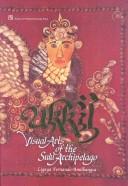
Ukkil
Visual Arts of the Sulu Archipelago
- Publisher
- Ateneo de Manila University Press
- Year
- 2005
- Language
- English
- Pages
- 296
- ISBN
- 9789715504812
- Availability
- In print
Still in print: the link goes to a shop that sells it.
About the book
The carved, woven and worked ornament of Sulu, ukkil, in a large illustrated study by the dancer and scholar who spent her life recording the archipelago’s arts.
Ligaya Fernando-Amilbangsa married into the family of the Sultan of Sulu and lived in the southern Philippines for more than 20 years. In this large illustrated book she records the visual arts of the Sulu archipelago, and argues that folk art should be read as a true record of social history.
The book has 7 chapters, one for each art: basketry, cloth weaving, embroidery, pottery, carving, blacksmithing and casting, and goldsmithing. She describes how each is made in close detail, from weaving looms to the oil used in casting, and links Sulu motifs such as the boat, the bird, the fish and the dragon to the rest of the Philippines and Asia. A reviewer in the Kyoto Review notes 2 full pages showing the parts of a Sama lepa houseboat.
She regrets the loss of some boats, carvings and crafts, and recommends reviving them. The book has photographs with long captions, a glossary and a bibliography. Ateneo de Manila University Press published it in 2005, and it was a finalist for the Gintong Aklat Award for the arts in 2006.
Cover from Open Library, shown to identify the book; its rights stay with the publisher.
More by Ligaya Fernando-Amilbangsa
1983Out of print
PangalayLigaya Fernando-Amilbangsa
The pangalay dance of Sulu and the dances, music and dress around it, documented in the field by the woman who brought it to the national stage.
On the same shelf
2012Out of print
The Qur’an and Islamic Manuscripts of Mindanaoeds. Midori Kawashima and Tirmizy E. Abdullah
A study of handwritten Qur’ans, prayer books and kitabs kept by families in Lanao, with what they show of how Islam was learned and copied in the region.
1975Out of print
The Maranaoeds. Mamitua Saber and Abdullah T. Madale
Essays by Maranao scholars on their own people: the sultanates, the torogan, the darangen, marriage, law and the lake.
1997Out of print
The MaranawsAbdullah T. Madale
A general account of the Maranao for students and the curious: history, social ranks, arts, beliefs and daily life around Lake Lanao.
1996Out of print
The Maranaw ToroganAbdullah T. Madale
The torogan, the carved house of the Maranao datu, its building, its okir and the rank it proclaimed.
1989Out of print
The Food & Culture of the TausugNorma Abubakar Abdulla
Tausug cooking and what it says of Tausug life: the dishes, the occasions and the manners of the table, with recipes.
2020Self-published
Tausug CookbookAbdulaziz H. Hamsain
Tausug dishes from a home cook, printed on demand: tiyula itum, pastil, satti and the rest.
More from Ateneo de Manila University Press
1991Out of print
Liberalism and the Quest for Islamic Identity in the PhilippinesKenneth E. Bauzon
How the liberal state and the Moro search for an Islamic political identity have failed to meet, by a Filipino political scientist.
2000In print
Making MindanaoPatricio N. Abinales
How Cotabato and Davao were drawn into the Philippine state in the first half of the twentieth century, through the datus and settler elites who learned to work it, and what that made of Mindanao politics.
2001In print
MagosahaH. Arlo Nimmo
Nimmo’s return to the Sama Dilaut three decades on: the full ethnography of a people who had by then mostly come ashore.
2004In print
The Great IslandMiguel A. Bernad
Essays on the exploration of Mindanao and the Christian missions there from the sixteenth century on, by a Jesuit historian who spent his later life in Cagayan de Oro.
2007In print
Mindanao Ethnohistory beyond NationsShinzo Hayase
Maguindanao, Sangir and Bagobo as peoples of one sea rather than of two countries, in a history that crosses the border with Indonesia the way they did.
2008In print
People of the Middle GroundRonald K. Edgerton
A hundred years in the Bukidnon–Lanao borderlands, where Maranao, Lumad, settlers and the state met and sometimes made terms.