Loading…
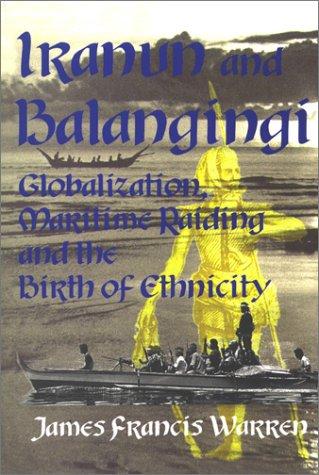
About the book
The Iranun and Balangingi raiders of the eighteenth and nineteenth centuries, the world economy that called their raiding into being, and how a way of life became an ethnic name.
This history looks at the Sulu and Mindanao region, the "Sulu Zone", from the late 18th century. It shows how world trade, long-distance sea commerce, raiding and the flight of refugees shaped its peoples. It follows Iranun raiding from its beginnings to the organised slaving of the 19th century, and the rise of the Balangingi and other seafaring groups.
James Francis Warren, a historian of Southeast Asia at Murdoch University, wrote it as a companion to his earlier book The Sulu Zone (1981). He draws on archives and published works, and on period testimony, diaries, interviews and his own fieldwork in the Philippines, Indonesia and Malaysia.
The book offers a way to understand how ethnic identity forms, and why it matters for political conflict in the region today. It was nominated for a national book award in the Philippines.
From nuspress.nus.edu.sg, press.uchicago.edu, researchportal.murdoch.edu.au.
HistoryPeoples and ways of life
Cover from Open Library, shown to identify the book; its rights stay with the publisher.
More by James Francis Warren
1981In print
The Sulu Zone, 1768–1898James Francis Warren
The Sulu Sultanate at its height as a trading state: the China trade in sea produce, the slave raiding that fed it, and the peoples it drew in, from Spanish, British and Dutch archives. The book that made the Sulu Zone a field of study. Second edition 2007.
On the same shelf
1973In print
Muslims in the PhilippinesCesar Adib Majul
The standard history of the Muslim peoples of the Philippines: the coming of Islam, the sultanates of Sulu and Maguindanao, and three centuries of Spanish wars against them, told from the Moro side of the record. Reissued by the University of the Philippines Press in 1999.
1905Free to read
Studies in Moro History, Law, and ReligionNajeeb M. Saleeby
The first English account of Maguindanao’s genealogies and of the law codes and Islam of Maguindanao and Sulu, translated by an American colonial official who read the originals. Out of copyright and free to read.
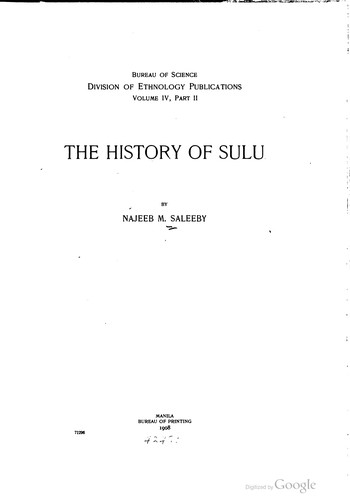
1908Free to read
The History of SuluNajeeb M. Saleeby
Sulu from its earliest written genealogies to the American arrival, drawn from the sultanate’s own documents, Spanish records and the author’s years in Jolo. Out of copyright and free to read.
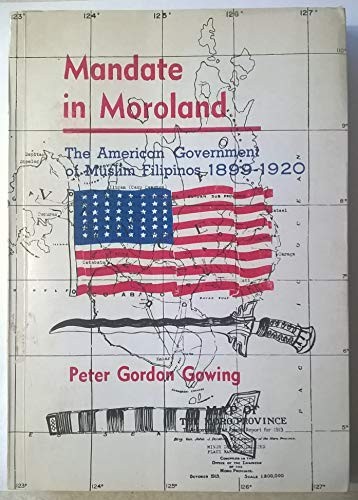
1977Out of print
Mandate in MorolandPeter G. Gowing
How the United States ruled the Moro Province and the Department of Mindanao and Sulu, from the Bates Treaty to the start of Filipinization, from the records of the men who governed. Reprinted by New Day in 1983.
1979Out of print
Muslim Filipinos: Heritage and HorizonPeter G. Gowing
A general introduction to the Muslim peoples of the Philippines, their history, faith and institutions and their place in the republic, written for Filipino readers from the Dansalan Research Center in Marawi.
1989Out of print
Triumph of Moro DiplomacyRuurdje Laarhoven
Sultan Kudarat’s Maguindanao as the Dutch and Spanish records show it: a sultanate that held its own between two empires by diplomacy as much as by war.
More from NUS Press
1981In print
The Sulu Zone, 1768–1898James Francis Warren
The Sulu Sultanate at its height as a trading state: the China trade in sea produce, the slave raiding that fed it, and the peoples it drew in, from Spanish, British and Dutch archives. The book that made the Sulu Zone a field of study. Second edition 2007.