Loading…
Literature · short stories
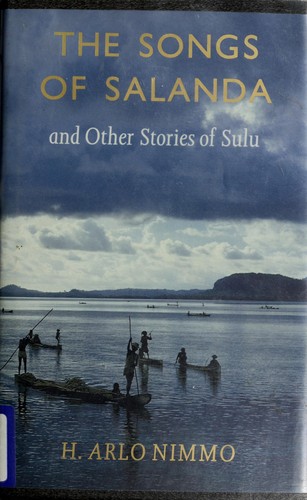
The Songs of Salanda and Other Stories of Sulu
- Publisher
- University of Washington Press
- Year
- 1994
- Language
- English
- Pages
- 237
- ISBN
- 9780295973340
- Availability
- Out of print
No longer sold new: look for it in a library, or for a used copy.
About the book
Stories of the Sama Dilaut of Tawi-Tawi, written by the anthropologist who lived among them, from what he saw and was told.
This is a collection of 16 short stories by H. Arlo Nimmo, an anthropologist who spent 2 years in the mid-1960s among the Sama Dilaut, also called Bajau, of the Sulu archipelago. The Sama Dilaut were then nomadic boat-dwellers who lived in small family houseboats in the far south of the Philippines.
The stories are based on people, places and events Nimmo met during that fieldwork. Together they follow a young man coming of age among people unlike any he had known. The publisher calls it a personal look back at his first fieldwork, and a picture of a people and their culture on the edge of great change.
The University of Washington Press published it in 1994. A coloured map of the Sulu archipelago is printed on the endpapers.
From openlibrary.org, archive.org.
In this engrossing collection of sixteen short stories, H. Arlo Nimmo tells of a young man coming of age while living among a remote cluster of islands in the southern Philippines with a people unlike any he had known. Nimmo combines an anthropologist's eye for the significant detail with a storyteller's gift for bringing his characters to life. His book is a vivid narrative of a people and their culture on the brink of momentous change. The Songs of Salanda is Nimmo's deeply personal exploration of his early anthropological field experiences in the Sulu archipelago. During two years in the mid-1960s, he researched the culture of the Bajau, a small group of nomadic boat-dwellers who plied the waters off the southernmost Philippine islands in small single-family houseboats. Nimmo's stories are based on the people, places, and events he encountered.
LiteraturePeoples and ways of life
Cover from Open Library, shown to identify the book; its rights stay with the publisher.
More by H. Arlo Nimmo
1972Out of print
The Sea People of SuluH. Arlo Nimmo
The boat-dwelling Sama Dilaut of Tawi-Tawi in the 1960s and the changes already reaching them, from the anthropologist who lived among them.
2001In print
MagosahaH. Arlo Nimmo
Nimmo’s return to the Sama Dilaut three decades on: the full ethnography of a people who had by then mostly come ashore.
On the same shelf
1979Out of print
Muslim Filipinos: Heritage and HorizonPeter G. Gowing
A general introduction to the Muslim peoples of the Philippines, their history, faith and institutions and their place in the republic, written for Filipino readers from the Dansalan Research Center in Marawi.
2002In print
Iranun and BalangingiJames Francis Warren
The Iranun and Balangingi raiders of the eighteenth and nineteenth centuries, the world economy that called their raiding into being, and how a way of life became an ethnic name.
1991Out of print
The Institutions of MaguindanaoGhislaine Loyré
The sultanate, the datus, the law and the ranks of Maguindanao society, set out from Spanish sources and the author’s ethnographic fieldwork.

2007In print
Mindanao Ethnohistory beyond NationsShinzo Hayase
Maguindanao, Sangir and Bagobo as peoples of one sea rather than of two countries, in a history that crosses the border with Indonesia the way they did.
1993Out of print
The Lumad and Moro of MindanaoB. R. (Rudy) Rodil
A short report for an international readership on the two peoples displaced by the settlement of Mindanao and the state of their claims in the early 1990s.

2007Free to read
Ridoed. Wilfredo Magno Torres III
The first systematic study of rido, the clan feuds that take more lives in Muslim Mindanao than the rebellion, with case studies from Lanao, Maguindanao, Sulu and Basilan and the ways communities settle them. Expanded edition from Ateneo de Manila University Press in 2014; the original is free to read.