Loading…
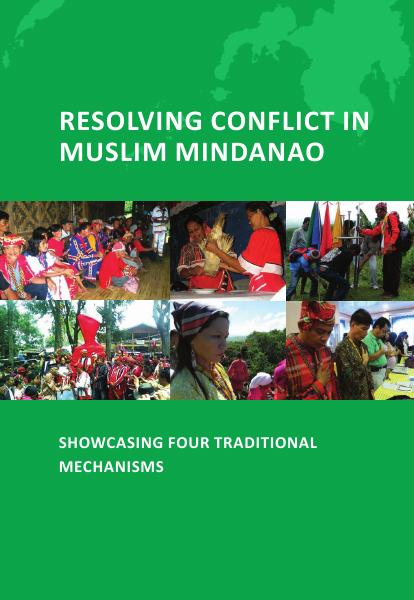
Culture and arts · book
Resolving Conflict in Muslim Mindanao
Showcasing Four Traditional Methods
Abubakar Datumanong, Parido Rahman Pigkaulan, Maguid Makalingkang and Juwairiya U. Lingga
- Publisher
- Institute of Bangsamoro Studies
- Year
- 2013
- Language
- English
- Pages
- 96
- ISBN
- 9789996381706
- Availability
- Free to read
Published free: the link opens the whole book.
About the book
Four ways Moro communities settle disputes and feuds by custom, set out by researchers from those communities, with the case for building them into the formal justice system.
This book gathers 4 studies of how disputes are settled in Muslim Mindanao outside, or alongside, the ordinary courts. Each researcher grew up with the tradition they describe. It was published by the Institute of Bangsamoro Studies in Cotabato City with the Centre for Peace and Conflict Studies in Cambodia.
Abubakar Datumanong, a grandson of the 23rd Sultan of Maguindanao, writes on the role of Maguindanaon datus in settling conflict. Parido Rahman Pigkaulan sets out Islamic principles of conflict resolution and how the Shari'ah courts and the Agama Arbitration Council work, arguing that they help ease congestion in the regular courts. Maguid Makalingkang surveys people in Maguindanao on which of 4 mechanisms they prefer and find effective: traditional settlement, the Shari'ah circuit court, the municipal trial court and the Katarungang Pambarangay. Juwairiya Uka-Lingga documents traditional conflict resolution among the Teduray of Upi.
The introduction argues that these customary methods deserve recognition and a place within formal justice and peacebuilding.
Published with the Centre for Peace and Conflict Studies.
Culture and artsWar and conflictPeoples and ways of life
Cover from the publisher’s PDF, shown to identify the book; its rights stay with the publisher.
More by the same authors
2014Free to read
Perspectives of the Subanen Tribe on the New Bangsamoro Political EntityEbrahim F. Ampuan and Juwairiya U. Lingga
What the Subanen, an indigenous people of the Zamboanga peninsula who are not Muslim, thought of the Bangsamoro entity then being negotiated, and what they asked of it.
On the same shelf
1985Out of print
The Contemporary Muslim Movement in the PhilippinesCesar Adib Majul
Majul’s short account of the Moro struggle of the 1970s and the rise of the Moro National Liberation Front, written for readers abroad.
1979Out of print
Muslim Filipinos: Heritage and HorizonPeter G. Gowing
A general introduction to the Muslim peoples of the Philippines, their history, faith and institutions and their place in the republic, written for Filipino readers from the Dansalan Research Center in Marawi.
2002In print
Iranun and BalangingiJames Francis Warren
The Iranun and Balangingi raiders of the eighteenth and nineteenth centuries, the world economy that called their raiding into being, and how a way of life became an ethnic name.
1991Out of print
The Institutions of MaguindanaoGhislaine Loyré
The sultanate, the datus, the law and the ranks of Maguindanao society, set out from Spanish sources and the author’s ethnographic fieldwork.
2007In print
Mindanao Ethnohistory beyond NationsShinzo Hayase
Maguindanao, Sangir and Bagobo as peoples of one sea rather than of two countries, in a history that crosses the border with Indonesia the way they did.
1993Out of print
The Lumad and Moro of MindanaoB. R. (Rudy) Rodil
A short report for an international readership on the two peoples displaced by the settlement of Mindanao and the state of their claims in the early 1990s.
More from Institute of Bangsamoro Studies
2007Out of print
The Long Road to PeaceSalah Jubair (Mohagher Iqbal)
The talks between the government and the MILF from 1997 to the eve of the Memorandum of Agreement on Ancestral Domain, from inside the Front’s panel.
2024Free to read
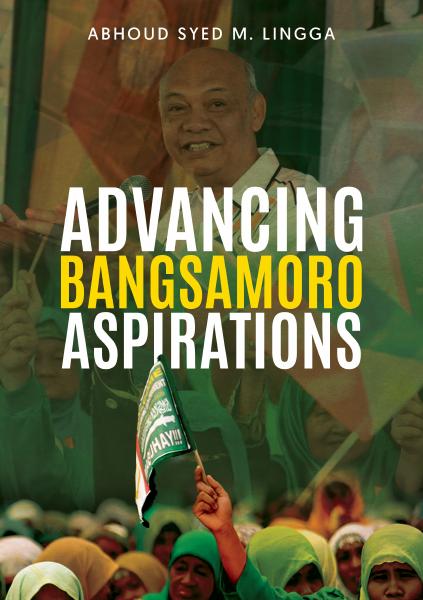
Advancing Bangsamoro AspirationsAbhoud Syed M. Lingga
Writings by the founder of the Institute of Bangsamoro Studies on the Bangsamoro’s road to self-determination: its history, the law and politics of the peace process, and what it means for peacebuilding elsewhere. Published for the 10th anniversary of the Comprehensive Agreement on the Bangsamoro.
2026Out of print
Bangsamoro and the EverydayInstitute of Bangsamoro Studies
A collection of personal stories from inside the Bangsamoro revolution, launched in Cotabato City on 17 June 2026. Its premise is to tell stories that had to stay hidden while the movement was clandestine.