Loading…
Economy and development · report
Out of the Shadows
Violent Conflict and the Real Economy of Mindanao
Edited by Francisco J. Lara Jr. and Steven Schoofs
- Publisher
- International Alert
- Year
- 2013
- Language
- English
- Pages
- 288
- Availability
- Free to read
Published free: the link opens the whole book.
About the book
The shadow economies of Mindanao, from guns and drugs to the informal credit and trade that ordinary people live by, and how they feed and are fed by the conflict. Free to read.
This book from International Alert reports research on the links between violent conflict and the informal, or "shadow", economy of Mindanao. It was edited by Francisco Lara Jr. and Steven Schoofs and supported by the Australian aid agency AusAID. It was launched in Manila in January 2013.
Its case studies cover the trade in illicit firearms, kidnapping for ransom, informal land markets, illicit cross-border trade, the traditional credit system and illicit drug markets. The book asks why these shadow economies are so resilient, and how they affect the chances for peacebuilding, development and democratic change.
The authors note that shadow economies are a large part of Mindanao's economy but had been largely left out of analyses of its conflict. They argue that the region's political and economic problems cannot be understood or solved without bringing the informal economy into the picture.
From international-alert.org.
More by the same authors
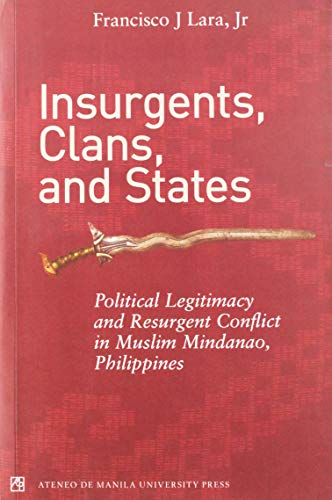
2014In print
Insurgents, Clans, and StatesFrancisco J. Lara Jr.
Why the conflict keeps returning: the clans, the rebel fronts and the state as rival sources of authority in Muslim Mindanao, and the shadow economy that sustains all three.
On the same shelf
1985Out of print
The Contemporary Muslim Movement in the PhilippinesCesar Adib Majul
Majul’s short account of the Moro struggle of the 1970s and the rise of the Moro National Liberation Front, written for readers abroad.
1981In print
The Sulu Zone, 1768–1898James Francis Warren
The Sulu Sultanate at its height as a trading state: the China trade in sea produce, the slave raiding that fed it, and the peoples it drew in, from Spanish, British and Dutch archives. The book that made the Sulu Zone a field of study. Second edition 2007.
1994Out of print
The Minoritization of the Indigenous Communities of Mindanao and the Sulu ArchipelagoB. R. (Rudy) Rodil
How the Moro and Lumad peoples became minorities in their own homeland: the land laws, the resettlement programmes and the migration from Luzon and the Visayas, with the figures.
1980Out of print
Revolt in MindanaoT. J. S. George
A journalist’s account of the Moro revolt of the 1970s, the MNLF and the Marcos government’s war, written as it happened.
1990Out of print
Muslim SeparatismW. K. Che Man
The Moro and Patani Malay movements side by side: their histories, their organisations and what each state did about them, in the first full comparison of the two.
2007In print
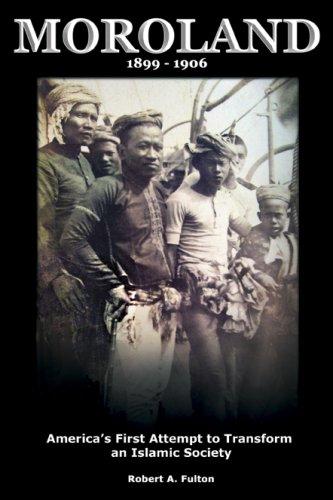
Moroland, 1899–1906Robert A. Fulton
The first years of the American occupation of the Moro country, from Bates’s treaty with the Sultan of Sulu to Bud Dajo, told campaign by campaign from the army’s records.
More from International Alert
2003Free to read
Breaking the Links between Economics and Conflict in MindanaoInternational Alert
A discussion paper on the economic roots of the Mindanao conflict and what business and donors could do about them. Free to read.
2014Free to read
Rebellion, Political Violence and Shadow Crimes in the BangsamoroInternational Alert
The first report from the Bangsamoro Conflict Monitoring System, built with police data and university partners. It maps violent incidents in the ARMM from 2011 to 2013 and links them to rebellion, clan feuds, politics and illicit economies.
2017Free to read
Guns, Drugs, and ExtremismInternational Alert
The 2017 Conflict Alert report on the causes, costs and trends of violent conflict in Muslim Mindanao from 2011 to 2016. It shows illegal guns, the drug trade and pro-ISIS extremist groups such as the Maute Group becoming major drivers of violence.
2018Free to read
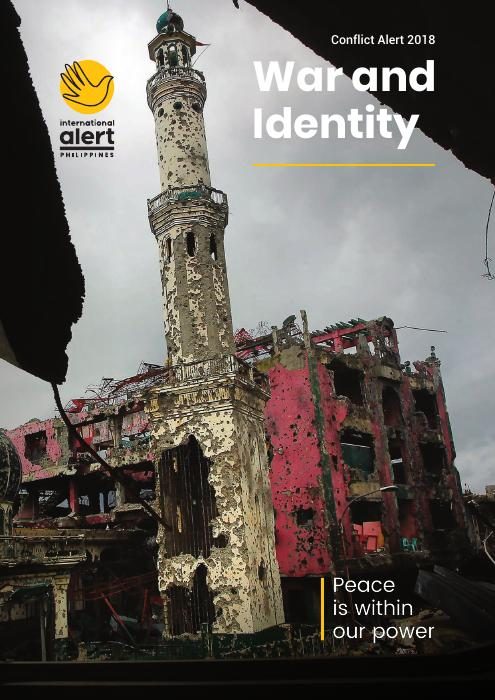
War and IdentityInternational Alert
The 2018 Conflict Alert report, written after the 2017 Marawi siege, on the threat of violent extremism in the Bangsamoro. It looks at what that threat means for the peace process and the region's future development.
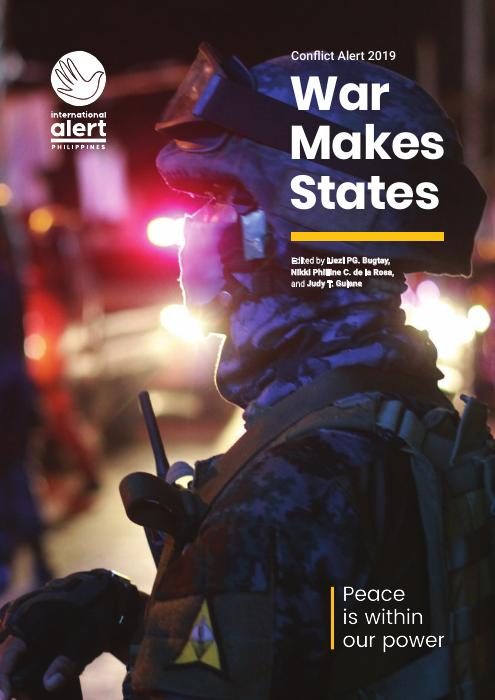
2019Free to read
War Makes Stateseds. Liezl PG. Bugtay, Nikki Philline C. de la Rosa and Judy T. Gulane
The 2019 Conflict Alert report on the fall in violent incidents in Muslim Mindanao after the Marawi war, even as extremist violence continued. Its title borrows Charles Tilly's line that war makes states, as the BARMM was being set up.
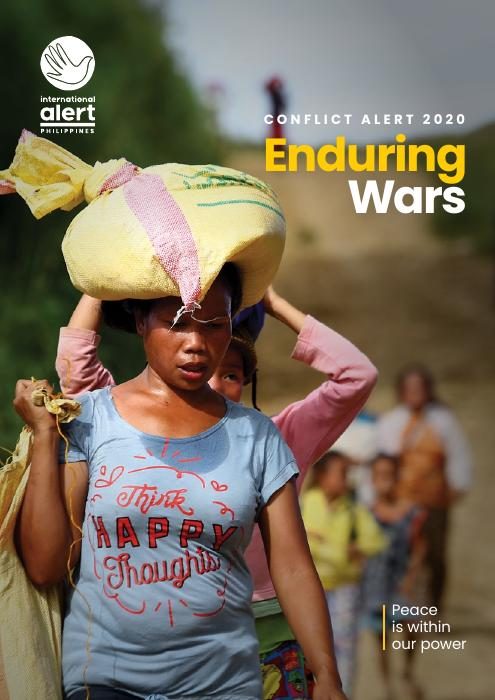
2020Free to read
Enduring WarsInternational Alert
The 2020 Conflict Alert report, analysing conflict data and trends in the Bangsamoro from 2011 to 2019. It tracks how long-running clan, political, criminal and extremist violence continued into the first year of the BARMM.