Loading…
Peoples and ways of life · book
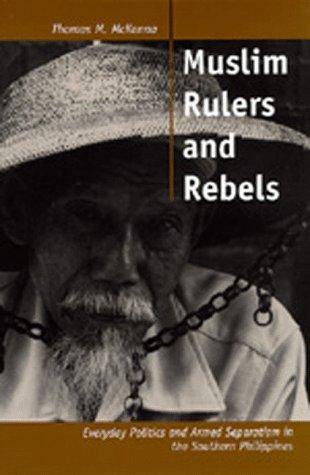
Muslim Rulers and Rebels
Everyday Politics and Armed Separatism in the Southern Philippines
- Publisher
- University of California Press
- Year
- 1998
- Language
- English
- Pages
- 364
- ISBN
- 9780520210158
- Availability
- Free to read
Published free: the link opens the whole book.
About the book
An anthropologist’s account, from years in Cotabato City, of how ordinary Maguindanaons lived the rebellion, the datus and the state, and why the separatist story and the everyday one do not match. Free to read in the University of California Press e-books collection.
Thomas McKenna asks a question most accounts of the Moro struggle skip: what were ordinary Muslims fighting for? The anthropologist did field research in Cotabato City, mainly in 1985–86, with return visits in 1988 and 1995. He combines this fieldwork with history to look at the gap between Muslim leaders and the people they claimed to lead.
The book has 11 chapters. The early ones trace Islamic rule in Cotabato, Spanish and American colonial rule, and what McKenna calls "the myth of Morohood". The later chapters follow the separatist rebellion, the war as seen from the community of Campo Muslim, the unarmed struggle, and Muslim nationalism after Marcos.
McKenna argues that separatist leaders won popular support in Cotabato because the established datus had done nothing to protect ordinary Muslims from the effects of massive Christian migration. Yet ordinary Muslims often resisted the changes to custom and ritual that movement leaders promoted. Their support for the rebellion did not mean they accepted every idea of those who led it.
From publishing.cdlib.org, ucpress.edu.
Peoples and ways of lifePolitics and governanceWar and conflict
Cover from Open Library, shown to identify the book; its rights stay with the publisher.
More by Thomas M. McKenna
2022In print
Moro WarriorThomas M. McKenna
The Moro guerrillas of Cotabato and Lanao in the Second World War, led by Edward Kuder’s foster son Mohammad Adil and the American schoolteacher himself, pieced together from their papers and the memories of those who fought.
On the same shelf
1985Out of print
The Contemporary Muslim Movement in the PhilippinesCesar Adib Majul
Majul’s short account of the Moro struggle of the 1970s and the rise of the Moro National Liberation Front, written for readers abroad.
1979Out of print
Muslim Filipinos: Heritage and HorizonPeter G. Gowing
A general introduction to the Muslim peoples of the Philippines, their history, faith and institutions and their place in the republic, written for Filipino readers from the Dansalan Research Center in Marawi.
2002In print
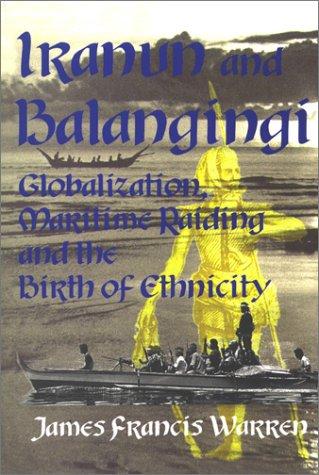
Iranun and BalangingiJames Francis Warren
The Iranun and Balangingi raiders of the eighteenth and nineteenth centuries, the world economy that called their raiding into being, and how a way of life became an ethnic name.
1991Out of print
The Institutions of MaguindanaoGhislaine Loyré
The sultanate, the datus, the law and the ranks of Maguindanao society, set out from Spanish sources and the author’s ethnographic fieldwork.
2000In print
Making MindanaoPatricio N. Abinales
How Cotabato and Davao were drawn into the Philippine state in the first half of the twentieth century, through the datus and settler elites who learned to work it, and what that made of Mindanao politics.
2010In print
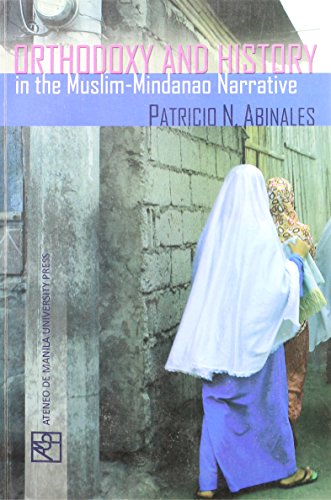
Orthodoxy and History in the Muslim-Mindanao NarrativePatricio N. Abinales
Essays questioning the received story of the Moro struggle, the unbroken resistance from Spain to the present, and asking what the record shows instead.